Pearl Releases National Oral Examination Report: AI Detects 8.7 Times More Dental Caries Than Traditional MethodsIssuing time:2026-06-30 17:16
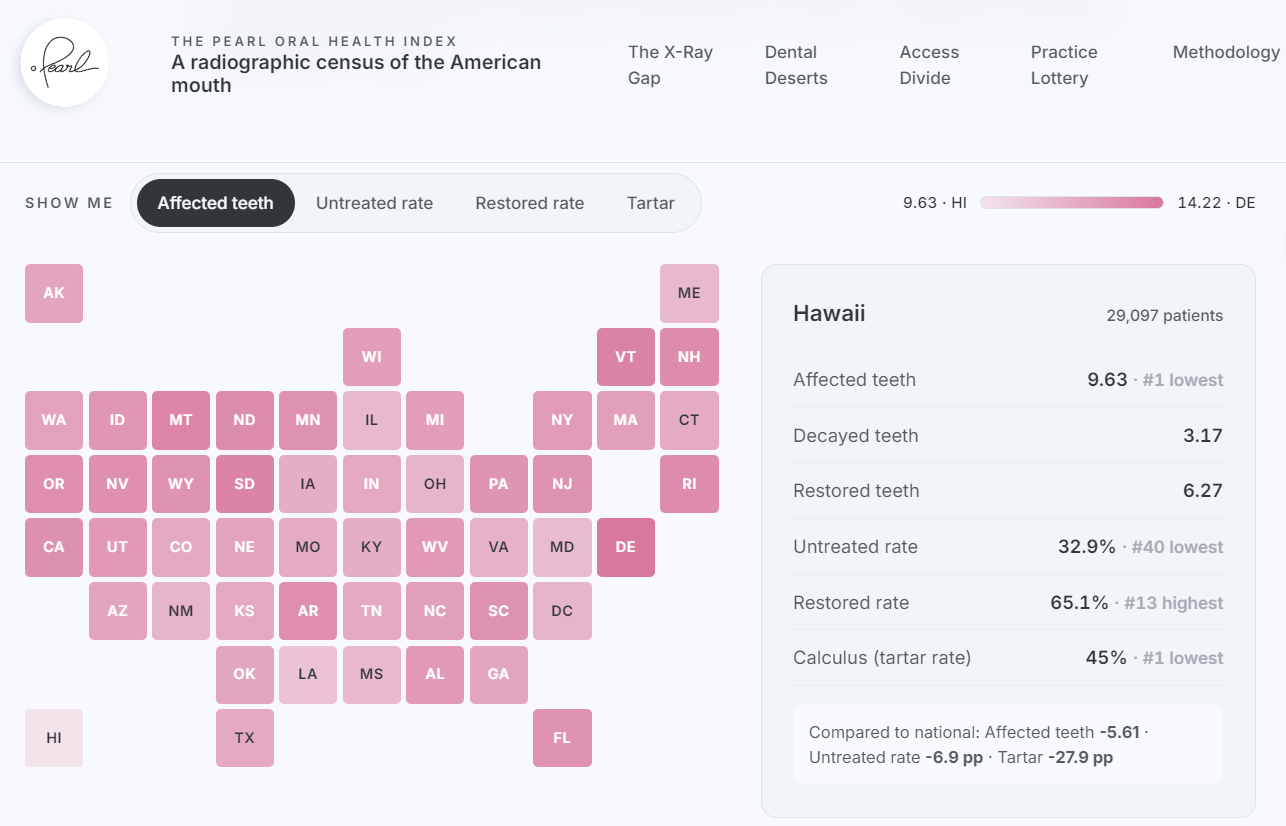
DentalGoodNews|June 29, 2026, Dental AI company Pearl released the "Pearl Oral Health Index". The report is based on an analysis of Dental AI radiographic images from April 2024 to March 2026, covering 15 million adult patients, 26 million dental visits, and 737 million teeth observations across the United States. The report shows that Pearl, using its FDA-approved Dental AI model to read radiographic images, found an average of 6.07 decayed teeth per patient (including decay that requires treatment but has not been restored, not the "untreated caries rate" metric). This is 8.7 times the estimate from the CDC's NHANES visual-tactile examination (which estimates 0.7 per patient, with about 21% of adults having untreated caries). The two methods are generally consistent in data for missing teeth (2.0 vs. 2.16) and restored teeth (6.0 vs. 7.01), suggesting the detection gap may stem from the detection methods themselves. In terms of geographic distribution, the report data indicates that "dental deserts" impact treatment decisions: in 25 zip codes completely lacking a resident dentist (covering 5,715 patients), 20.8% of damaged teeth were extracted rather than restored, compared to only 14.9% in areas with a high density of dentists (more than 51). This means that when a community lacks professional medical resources, treatment plans are more likely to favor extraction, thereby exacerbating tooth loss among patients.
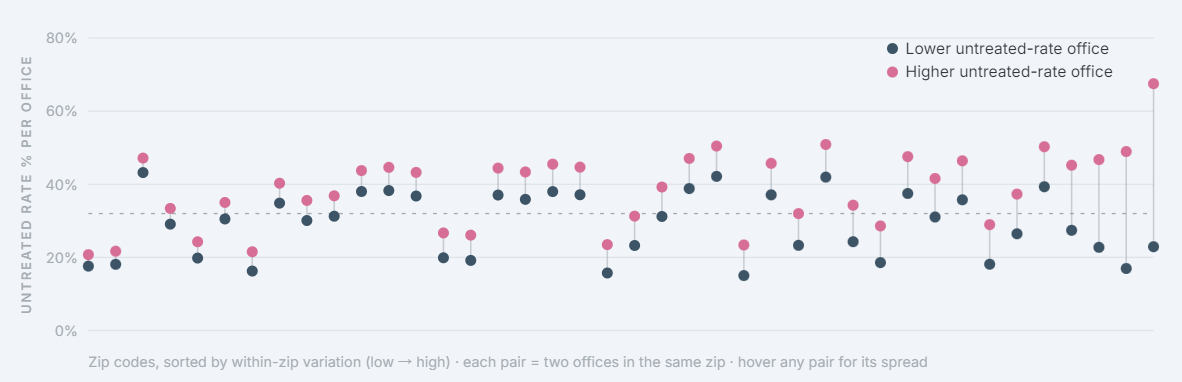
Furthermore, diagnostic discrepancies within the same community reveal inconsistencies in treatment outcomes across different clinics: among 937 comparable zip codes, the typical difference in untreated caries rates between clinics in the same zip code was 9.2 percentage points. For the top 10% of zip codes, the P90 difference was 17.8 percentage points, with the maximum gap reaching 45 percentage points. Among 282 clinics each treating more than 200 adult patients, the 90th percentile clinic detected 4 times the number of affected teeth as the 10th percentile clinic (12.4 vs. 3.1).
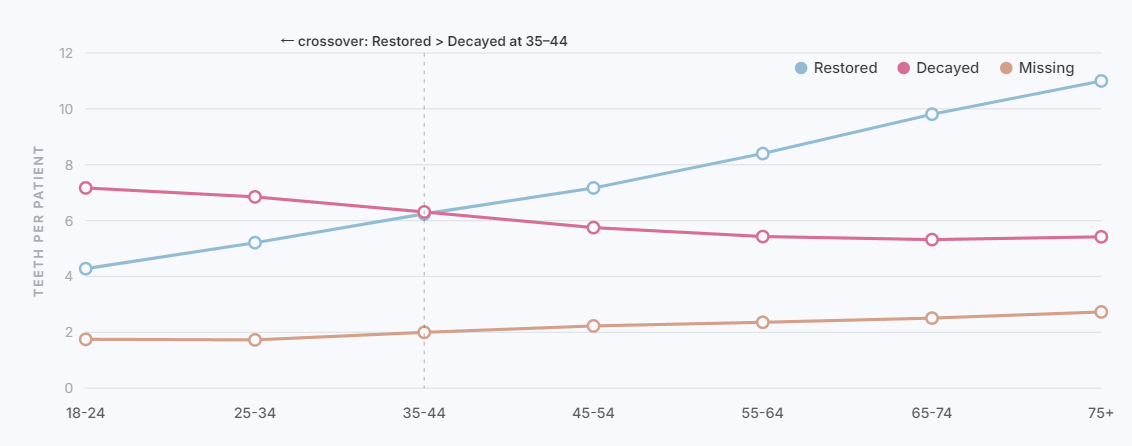
Age group analysis shows that untreated problems are most prominent among young adults aged 18-24, with a total of 13.2 affected teeth, 52% of which are untreated. For those over 75, the total number of affected teeth rises to 19.1, but the proportion of untreated cases drops to 28%. The report also notes that the number of restored teeth begins to exceed the number of untreated caries in the 35-44 age group. From a tooth-specific perspective, first molars (#3, #14, #19, #30), while accounting for only 14% of all teeth, contribute 24% of caries and 31% of restorations. The median age for the first detection of caries in first molars is 17, for second molars and premolars it is 18, for canines and upper incisors it is 21, and for lower incisors it is 23, suggesting differences in the timing of caries risk across different tooth types.
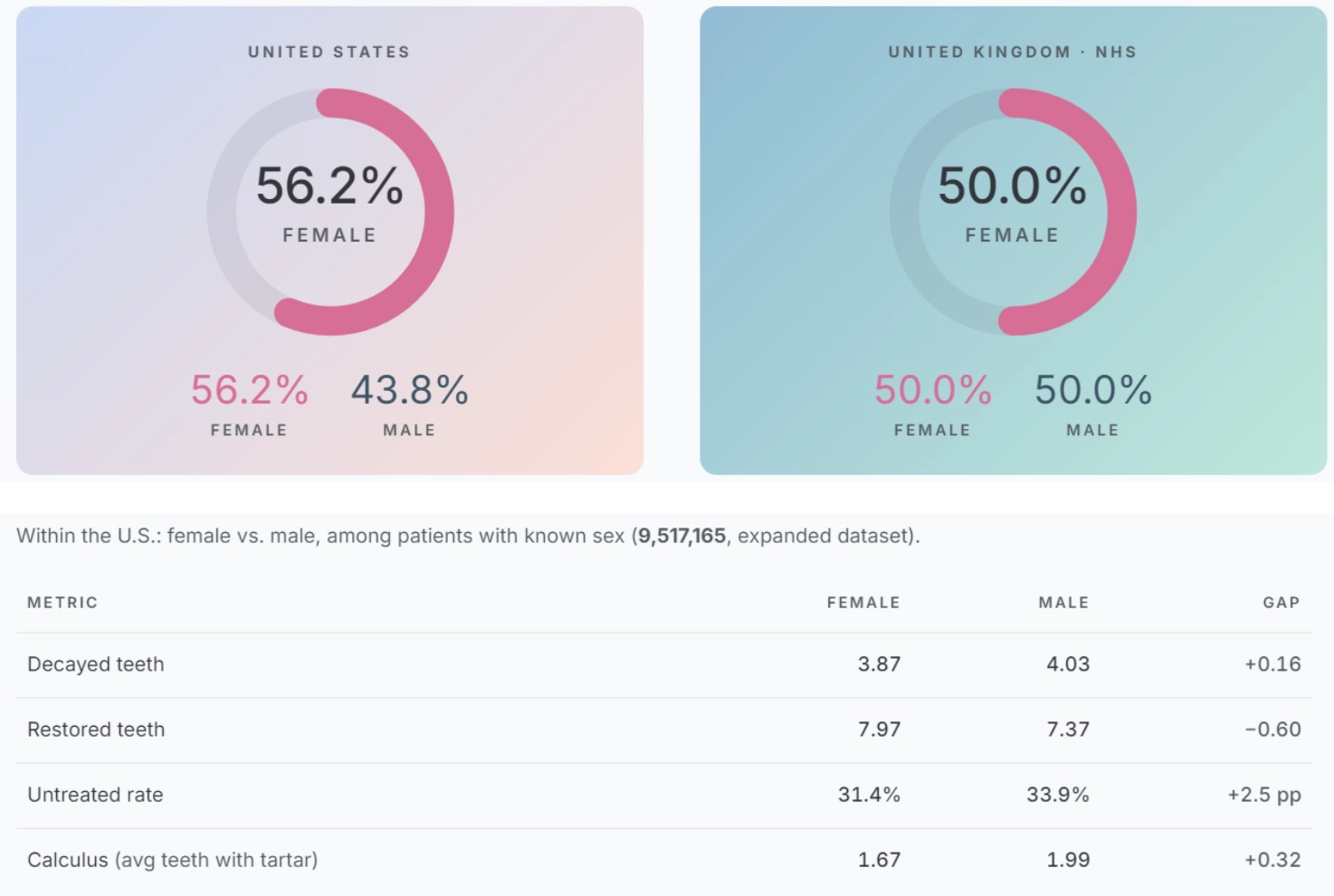
Regarding gender differences, the U.S. sample comprised 56.2% female and 43.8% male, with a higher proportion of women entering the dental care system. The report states that among those who have visited a dentist, clinical indicators are similar between genders: males and females have an average of 3.87 and 4.03 decayed teeth per patient, 7.97 and 7.37 restored teeth, and untreated rates of 31.4% and 33.9%, respectively. In comparison, the gender ratio for visits under the UK's National Health Service (NHS) is 50/50. In the FMX sample, UK patients had 6.36 missing teeth, higher than the U.S. figure of 2.16, with about 31% of affected teeth being extracted, compared to 14.5% in the U.S. It should be noted that the report's sample consists entirely of patients who have already entered the dental care system and cannot represent populations that have not accessed dental services. The report also notes that some detection results were not replicated in follow-ups: 36% of detected caries did not reappear in the subsequent visit, which may include genuine clinical changes or may be related to the consistency of the AI at the detection boundary.
Article classification:
Industry News
【GOODNEWS】 Content for industry reference only (based on public info & professional judgment); not for decision-making. Readers bear full responsibility for their own judgment and risks.
Copyright © This Platform. Unauthorized reproduction & commercial use prohibited.
Errata, contributions & cooperation: Contact customer service via WeChat:HDSW_001
|
✉️
Subscribe to Our
Newsletter
We curate important stories and exclusive insights, delivered straight to your inbox.
In-depth analysis · Exclusive content · Fast-moving news
|